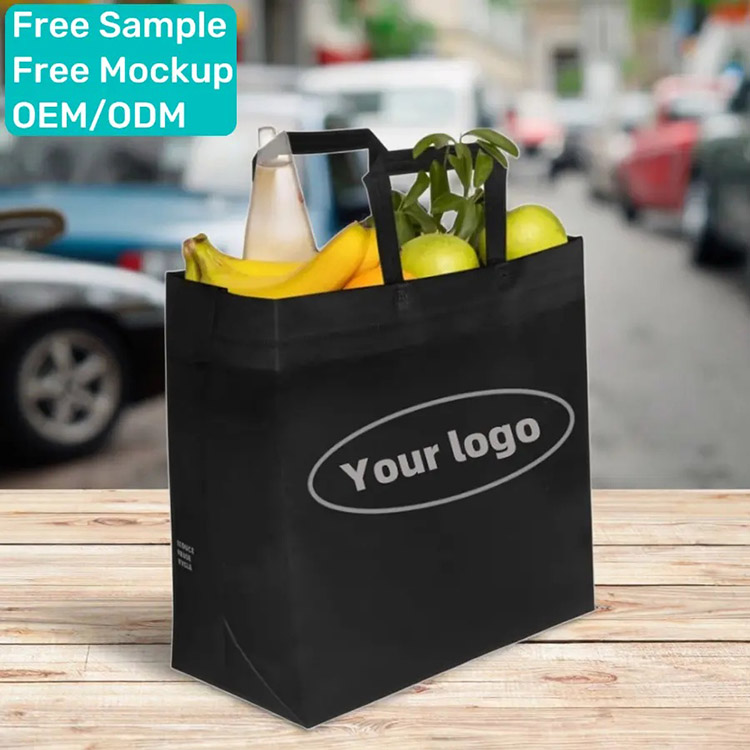




When you order reusable shopping bags for retail packaging, promotions, or branded shopping, the manufacturing method affects much more than just the appearance. It also impacts seam strength, bag durability, production consistency, and overall cost.
Heat-sealed eco bags are made by bonding compatible materials together using controlled heat and pressure, rather than traditional sewing. This construction results in clean, even edges, making them ideal for a wide range of lightweight, reusable shopping bag applications.
But how are heat-sealed eco bags made? And what should you consider when sourcing them? This guide will walk you through the manufacturing process of heat-sealed bags, explain the differences between heat-sealed and sewn bags, and highlight the factors you should consider before placing a custom order.
UN heat-sealed eco bag is a reusable bag whose specific layers or edges are joined together by heat sealing. Unlike stitching, heat sealing creates a strong bond in specific areas of the bag.
The term “eco-bag” refers to the product’s materials and intended use, not the heat-sealing process itself. A heat-sealed bag is not necessarily eco-friendly simply because it’s heat-sealed. Its eco-friendliness depends on a variety of factors, such as material composition, recycled content, durability, and the frequency of reuse.
This distinction is crucial for businesses. If you are sourcing custom-made heat-sealed eco-bags, you should comprehensively evaluate their materials, construction, and expected lifespan, rather than relying solely on the product name.
The specific production process for heat-sealed bags varies depending on the materials, bag structure, equipment, and customization requirements. However, commercial production typically follows several key steps.
Choosing the right material is the first step in ensuring the reliability of heat-sealed bags.
The material needs to be compatible with the heat-sealing process and suitable for its intended use. The material’s thickness, strength, surface properties, and flexibility all affect the performance of the finished bag.
For example, a lightweight promotional bag may have different material requirements from a reusable shopping bag designed to carry heavier products. Sacs non tissés can be a practical option for lightweight retail and promotional applications.
Gramweight per square meter (GSM) is another parameter worth discussing with suppliers. GSM represents the weight of woven or nonwoven material. Generally, a higher GSM means more material per square meter, but GSM alone does not determine the overall strength of the finished bag. The material composition, structure, seal quality, and handle design are equally important.
Once the material is selected, it needs to be prepared and cut according to the required bag size.
Precise cutting is crucial, as even minor deviations can affect the final shape, handle placement, and seal alignment. Size consistency is especially important if you are ordering large quantities of custom packaging bags and require each product to perfectly match the approved sample.
At this stage, the manufacturer should also consider the materials needed for seams, folds, side flaps, and other structural features.
Heat sealing is a critical step in the manufacturing process.
Selected areas of material are treated under controlled temperature and pressure, causing compatible surfaces to bond together. Once the sealed area cools, a continuous seam is formed.
Three parameters are particularly important: temperature, pressure, and sealing time. If the temperature is too low, complete bonding may not occur. If the temperature is too high, the material may deform or be damaged. Insufficient or excessive pressure will also affect the consistency of the seal.
This is why production control is so crucial. Reliable heat-sealable packaging bag manufacturers need to maintain appropriate sealing parameters for the selected materials, rather than using the same settings for all products.
Handles are a key component of reusable shopping bags because they transfer most of the weight from the bag body to the user’s hands.
Therefore, the length, width, installation location, and reinforcement method of the handles should be matched to the intended use of the shopping bag. For example, a promotional bag for carrying lightweight items may require a different handle structure than a shopping bag for carrying heavier items.
During the production process, the installation of the handles should also be carefully inspected, because even a sturdy bag body cannot compensate for weaknesses in the handle connections.
Once the bag structure is complete, the brand logo can be added according to the approved design.
For custom heat-sealed eco-friendly bags, the appropriate printing method depends on the material, pattern, number of colors, order quantity, and desired surface finish. A simple logo may require a different printing process than a complex multi-color design.
Before mass production, you should confirm the pattern size, logo placement, colors, and printing area. Obtaining approved samples or production drafts helps avoid costly modifications after production has begun.
Quality inspection helps identify problems before packaging and shipping.
Finished bags should be inspected for dimensions, seal consistency, handle connections, printing accuracy, and overall appearance. If the bags were designed for specific load requirements, relevant structural areas should also be evaluated.
Consistency is especially important for large-volume orders. The goal is not just to produce a satisfactory sample, but to maintain consistent specifications throughout the entire production process.
After inspection, the finished bags are folded or arranged according to the agreed packaging method and ready for shipment.
Packaging should protect the bags from moisture, compression, dust, and unnecessary damage during transportation. For custom orders, accurate carton quantities and clear labeling also facilitate receiving and inventory management.

Heat-sealed vs. sewn bags is not simply a question of which construction method is better. The appropriate choice depends on material, design, load requirements, and intended use.
| Fonctionnalité | Heat-Sealed Bags | Sewn Bags |
|---|---|---|
| Construction | Material bonded with heat and pressure | Material joined with thread |
| Apparence | Clean, uniform sealed edges | Visible stitched seams |
| Production | Efficient for compatible materials | Traditional sewing process |
| Design flexibility | Depends on material and sealing process | Broad range of sewn structures |
| Key consideration | Sealing parameters and material compatibility | Stitching quality and seam construction |
Heat sealing can be advantageous when you want a clean construction and efficient production for suitable materials. Sewing, on the other hand, can be preferable when the bag design requires stitched reinforcement or materials that are not suitable for heat sealing.
For procurement, the better question is not “Which method is stronger?” but “Which construction is appropriate for the product I need?”
Material is the foundation of a finished packaging bag. Thickness, composition, flexibility, and tensile properties all affect its durability and sealing performance.
If you are comparing different suppliers, avoid evaluating packaging bags solely based on grammage (GSM). Always inquire about the actual material specifications and how they match your intended use.
Temperature, pressure, and sealing time must be controlled according to the material.
Consistent parameters contribute to a uniform seal throughout the production process. Improper control can lead to weak seams, deformation, inconsistent edges, or other quality issues.
The performance of a packaging bag depends on its overall structure, not just the bag body. When determining your needs, consider handle attachment methods, side flaps, reinforced areas, and dimensions.
Brand quality directly impacts customers’ impressions of your business. Therefore, in addition to the physical structure of the packaging bag, check the clarity, color consistency, placement, and print durability of the logo.
First, consider what items your customers will carry and how often the bags will be reused. Promotional bags, retail shopping bags, and heavy-duty shopping bags may require different sizes.
Ask the supplier to provide the material type and weight, rather than simply choosing bags based on photos. This provides a more useful basis for product comparison.
Remember, a higher weight does not necessarily mean a better bag. The material composition and construction must be matched to the intended use.
Provide the expected product size and approximate load capacity requirements. This helps the manufacturer recommend the appropriate bag size, handle construction, and material specifications.
If your bags require logo or custom designs, confirm the available printing methods, printing areas, colors, and sample approval process before production.
For large-volume orders, the supplier’s production capacity is crucial. Inquire how the manufacturer controls seal quality, inspects finished products, handles custom specifications, and maintains consistency across production batches.
CICC can assist companies in customizing reusable packaging bag solutions, helping them match materials, bag structure, branding, and production requirements with the intended use.
If you need packaging with a simple structure, reusability, and customized branding, heat-sealed eco-friendly bags are a practical choice. They are especially worth considering when the selected materials are suitable for heat sealing and the bag’s structure meets the expected load-bearing and usage conditions.
However, heat sealing is not a panacea. If your application requires strong load-bearing capacity, special reinforcement measures, or specific materials, heat sealing and sewing processes should be compared before making a final decision.
For the purchasing team, the best choice is to match the packaging bag’s materials, structure, size, branding, and expected lifespan with the actual application.
Yes, many heat-sealed eco-friendly bags are designed for reuse. Their actual lifespan depends on the materials, seal quality, handle construction, load-bearing capacity, and frequency of use. For regular retail applications, you should choose a size that meets the intended carrying conditions.
Yes, but suitability depends on the materials, bag construction, seal design, and handle connection. If your customers need to carry heavy products, provide the manufacturer with the expected load-bearing capacity so they can assess the appropriate construction.
Heat sealing is suitable for materials that can form a reliable bond under controlled temperature and pressure. Specific materials should be selected based on their seal compatibility, intended use, durability requirements, and environmental goals.
The first consideration should be the intended use and load-bearing requirements, not simply choosing the highest possible GSM. Suppliers can help you determine the appropriate GSM based on the materials, bag size, construction, and intended use.
Please provide the required bag size, material preference, approximate weight (GSM), handle style, logo or design, printing requirements, order quantity, and intended use. If you are unsure about any specifications, please specify the intended use of the bag so the manufacturer can recommend a suitable configuration.
Understanding the manufacturing process of heat-sealed eco-bags helps you comprehensively evaluate their performance, not just their appearance. Factors such as material selection, cutting precision, heat-sealing parameters, handle structure, printing process, and quality inspection all affect the final product’s performance.
When comparing heat-sealed bags and sewn bags, you should focus on your specific application needs, rather than assuming that one manufacturing method is always superior. A suitable combination of materials, structure, and manufacturing processes is essential to creating eco-bags that meet both functional requirements and brand promotion goals.
Zhongjin provides customized bag solutions for businesses that need reliable materials, practical construction, and professional logo customization. Whether you are developing a new retail bag or placing a larger customized order, the right specifications can help you achieve consistent quality from the first sample to the final shipment.
Looking for custom heat sealed eco bags for your next order? Contact Zhongjin to discuss your material, GSM, size, printing, and quantity requirements, and request a custom quote today.