




Insulated cooler bags have become an indispensable item in daily life – whether it is transporting fresh ingredients, keeping food cool for picnics, or delivering temperature-sensitive items, it is indispensable. However, due to improper use or lack of maintenance, many users cause the insulation ice bag to lose its insulation performance or be damaged prematurely.
This article will provide you with a practical guide to help extend the lifespan of insulated ice bags (Bag lifespan), covering the analysis of bag material, the correct use of ice bags (Bag with ice) and Cooler maintenance techniques.
The Zhongjin insulation ice bag adopts high-quality materials to achieve a balance between durability and insulation:
Outer layer: 600D Oxford cloth or nylon with waterproof coating – scratch-resistant, tear-resistant, waterproof, protecting the internal insulation layer from external damage;
Insulation layer: High-density EPE (8-12mm) or double-layer EPE + PEVA – excellent insulation, lightweight, non-toxic, resistant to deformation;
Inner layer: Food-grade TPU or PE material – smooth surface, easy to clean, resistant to oil, corrosion, low temperature (minimum -20 ℃), safety and durability.
These materials work together to form a strong structure, laying the foundation for a long service life.
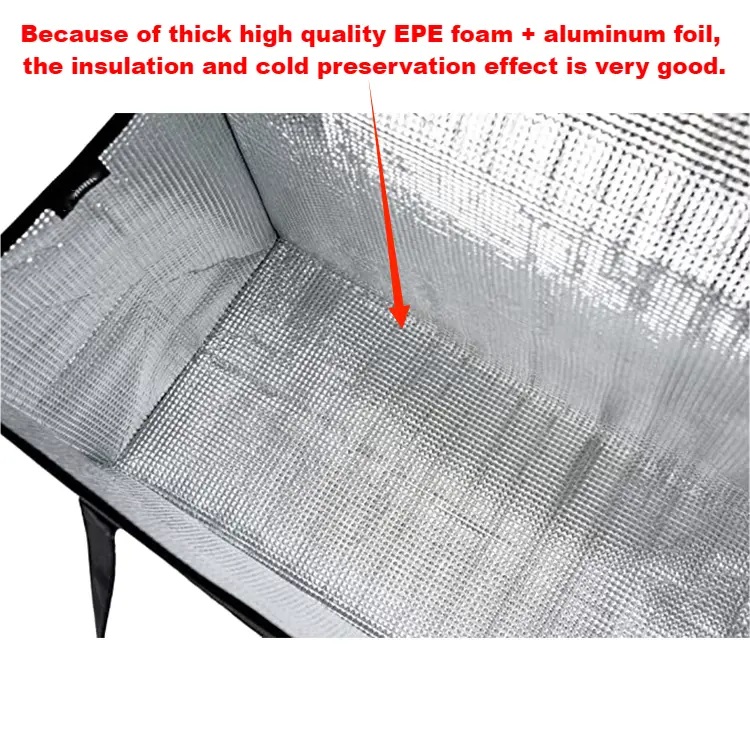
Inside view of insulated cooler bag with EPE foam and aluminum foil for takeaway delivery
The following factors may shorten the service life of the insulated ice bag:
Material aging: Long-term exposure to sunlight (ultraviolet rays) will damage the outer layer and insulation layer;
Moisture damage: If the residual water or food residue in the bag is not cleaned in time, it may breed mold or damage the insulation layer;
Overloading: Exceeding the maximum load limit of the bag (usually 5-10 kg for Zhongjin products) will tear the seam or cause the insulation layer to deform.
Improper cleaning: Using irritating chemicals or abrasive tools can damage the inner layer and the waterproof coating.
Understanding these factors helps to carry out targeted maintenance work.
When using the insulated ice bag as an ice bag, avoid direct contact between the ice and the inner layer:
Check the weight mark on the product label (the small capacity model is 5kg, and the large capacity model is 8-10 kg). Overloading may lead to:
Avoid dragging the bag on rough surfaces (such as cement floors, gravel roads) and use the handle or shoulder strap to carry it;
Keep away from sharp objects (such as blades, hard containers) to prevent puncturing the inner layer. The inner layer of Zhongjin TPU is more resistant to puncture than ordinary PE, but it should still be used with caution.
After each use:
Deep clean every 2-3 weeks (or after storing seafood and other strong-tasting items):
Place the bag in a cool and dry place (such as a cupboard) away from humid areas (bathrooms, basements) and heat sources (radiator, oven) – humidity can cause mold, and high temperatures can accelerate the aging of the bag material;
Lightly open the zipper or bag opening to maintain air circulation — to prevent the buildup of odors and moisture.
When storing, do not fold the bag flat and do not pile heavy objects on top of it – squeezing will cause the EPE insulating layer to permanently deform and reduce the insulation performance;
The foldable insulated ice pack of Zhongjin should be folded gently along the designated crease and stored with minimal pressure on the insulation layer.
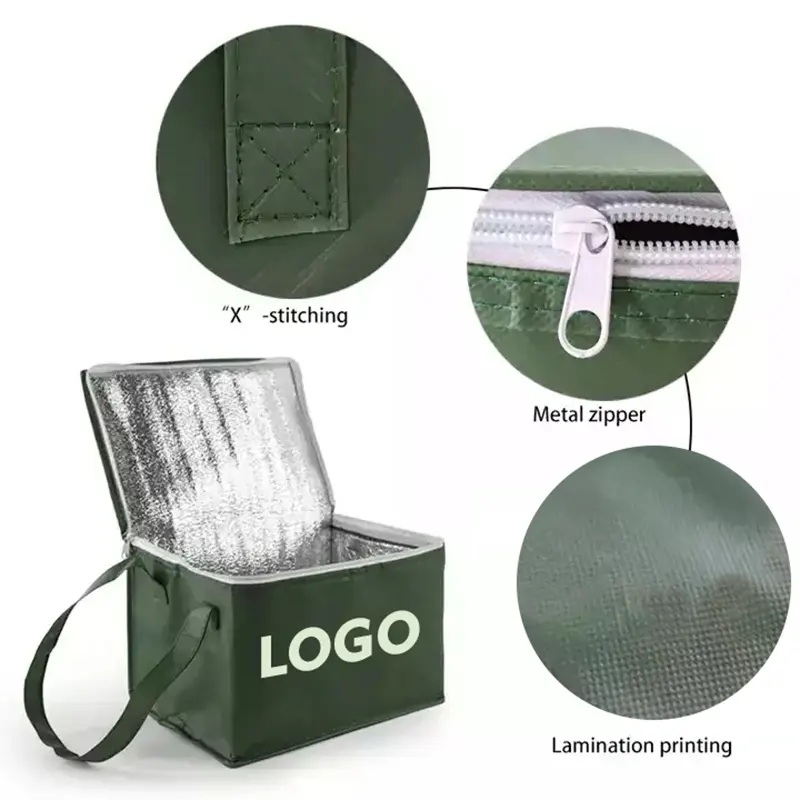
Reinforced seams: The handles, shoulder straps, and edges are made of double-stitched seams, which are not easily torn even when used frequently;
Anti-ultraviolet outer layer: Zhongjin Oxford cloth is treated with anti-ultraviolet treatment, compared with ordinary bags, the outdoor service life is extended by 30%;
Anti-deformation insulation layer: High-density EPE bubble wrap can still maintain its shape after repeated use, ensuring stable insulation performance.
Removable inner layer: Some Zhongjin models are equipped with removable TPU inner layer —— can be hand washed separately, more convenient and thorough deep cleaning;
Waterproof zipper: Prevent water from entering the bag when using or cleaning, reduce damage caused by moisture;
Smooth inner surface: The non-stick TPU / PE inner layer is not easy to adhere to food residues, reducing the need for strong cleaning.
The technical team of Zhongjin gives the following professional advice on the maintenance of insulated cooler bags:
Cleaning product selection: Only use neutral cleaners (such as mild detergent) and soft cloths, and strictly prohibit the use of bleach, alcohol or abrasive sponges – these items will corrode the inner material and waterproof coating, shortening the service life (Bag lifespan);
Regular inspection and repair: Monthly inspection of whether the bag is damaged (such as loose stitching, puncture of the inner layer), timely handling of small problems (Zhongjin provides special repair kits for bulk customers, including food-grade tape and needles), to avoid the expansion of damage;
Alternate use: If you need to use it frequently, it is recommended to prepare 2-3 insulated ice packs to alternate use – let each bag have a “rest” time, reduce continuous wear and tear, and extend the overall service life.
Q1: Can I wash Zhongjin’s Insulated Cooler Bags in a washing machine?
A1: Not recommended. Machine washing will damage the structure of the insulation layer and the waterproof coating, resulting in a decrease in thermal insulation performance. Zhongjin recommends hand washing only: wipe the inner layer with a damp cloth dipped in a neutral cleaner, rinse with clean water, and let it dry thoroughly; Models with removable TPU inner layers can be hand-washed separately, but still cannot be machine-washed.
Q2: How to remove stubborn odors from Insulated Cooler Bags?
A2: Mix warm water and baking soda in a 1:1 ratio, wipe the inner layer with the mixed liquid, let it stand for 15-25 minutes, rinse with clean water and thoroughly dry. If the odor still remains, you can place a small bowl of baking soda or activated carbon in the bag and seal it for 24 hours to absorb the odor. The non-porous inner layer of the Zhongjin insulation ice bag is not easy to deeply adsorb unpleasant odors, making it easier to handle.
Q3: Can I use Insulated Cooler Bags to store hot food for a long time?
A3: The Zhongjin insulation ice pack supports both cold and hot use (applicable temperature for hot food is 40-6oC), but it is not recommended to store hot food for a long time (more than 8 hours). High temperature will accelerate the aging of the insulation layer and the inner layer material, shortening the service life;When storing hot food, it is recommended that the maximum use time is not more than 4-6 hours, and avoid packing food with a temperature of more than 60 ℃.
Q4: What should I do if the inner lining of the Insulated Cooler Bag is punctured?
A4: If the hole is small (less than 1 cm), you can seal the hole with food-grade waterproof tape to prevent water from entering the insulation layer; If the tear is large, it is recommended to contact Zhongjin after-sales service – most models can provide replacement inner layers, and the team will guide the replacement steps. Note: If the inner layer is damaged and continues to be used, water may damage the insulation layer, resulting in a significant decline in insulation performance.
Q5: How long is the normal Bag lifespan of Zhongjin’s Insulated Cooler Bags with proper maintenance?
A5: Under the premise of proper use and maintenance of the cooler, the normal household life of the Zhongjin insulation ice bag is 2-3 years; In commercial scenarios (such as daily fresh delivery), the lifespan is 1.5- 2 years. Thanks to the high-quality bag material and reinforced design, even after long-term use, the bag can still retain more than 70% of its original thermal insulation performance.
It is not difficult to extend the lifespan of insulated cooler bags, the key is to understand the characteristics of the bag material, use it correctly (especially when it is used as a bag with ice), and insist on regular maintenance of the ice bag. Zhongjin Packaging’s insulated ice packs have been designed with durability and ease of maintenance in mind from the very beginning, but the key to maximizing their lifespan is the correct use habits of the users.
By following the tips in this article, you can not only keep the insulated ice pack in good condition for a long time and reduce waste caused by frequent replacements, but also practice the concept of sustainable living. If you want to know more about Zhongjin insulated ice packs, or need personalized maintenance advice, please visit Zhongjin’s official website or contact the customer service team for professional support.