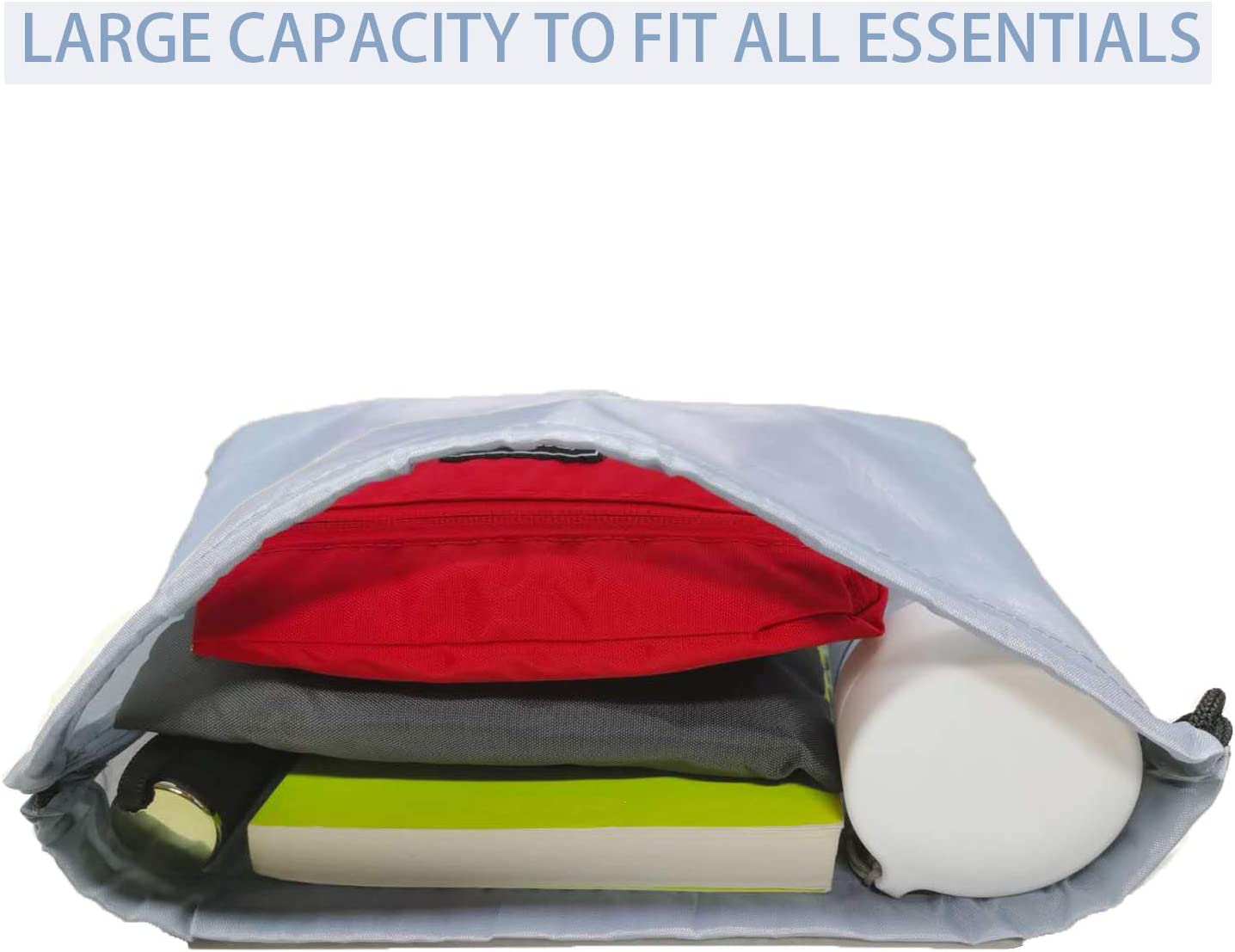


You have probably held one without naming it: the light shopping bag a cashier folds flat with two holes punched through the top. A die-cut non-woven bag is that bag, and it is the cheapest reusable format that still looks retail-ready. But it is not right for every program, and fitting it to the wrong one shows up later as torn handles, reprints or a bag that sags by week two. This guide shows you how punched-handle bags are built, where they earn their place, and how to spec one that survives real use.
A die-cut non-woven bag starts as one flat sheet of polypropylene non-woven fabric. The sheet is folded, the two side edges and the base are closed with heat sealing or ultrasonic welding, and a steel die punches the handle opening straight through the folded top in a single stroke. Nothing is stitched and no strap is added. That one fact explains how the whole bag behaves: the load in your hand passes into the fabric face instead of into a stitched joint, so the fabric carries the weight and the top edge becomes the stress line.
It also explains why the format is so quick to produce. A sewn tote needs its handle straps cut, positioned, stitched and bartacked before the bag is finished. A punched-handle bag leaves the sealing line and goes straight to the die press. Fewer operations mean a lower unit price and a shorter run-up, which is exactly why these bags hold the checkout counter and the high-volume promotional drop. Buyers in the United States often call the narrow silhouette a t-shirt bag, while European retail programs tend to say punched handle bags or simply die-cut handle bags.

Ask any factory for a price on non woven shopping bags and you will usually get three handle systems on the same sheet. They photograph alike and behave nothing alike in a shopper’s hand.
| 工事 | How the handle is made | Handle colour | Typical program | Where it fails first |
|---|---|---|---|---|
| Die-cut (punched handle) | A die punches the opening through the sealed top edge of the bag body | Body colour only | Checkout, giveaways, short-trip retail | The top edge around the opening |
| Loop handle (welded) | A separate non-woven strap is welded onto the bag face | Can contrast with the body | Mid-weight retail, pharmacy, forecourt | The weld line where strap meets body |
| Sewn tote | A strap is stitched on with X-box or bartack | Can contrast, or use webbing and cotton | Reusable programs, premium gifting | The stitch line and handle joint |
The trade-off is easy to state. A punched handle is the fastest and cheapest of the three, but it locks you into a single-colour handle and puts all the stress on one edge. If your program needs a contrasting handle, a longer carry life, or a bag that reads as a gift rather than as packaging, a sewn-handle tote bag is usually the better answer even at a higher unit cost. If you want to stay in the sealed family but need a strap, look at the heat sealed eco bag range instead.
A punched-handle bag does its best work when the bag has to be cheap, fast, and good enough for one trip home. In day-to-day buying that covers five situations.
Where it is the wrong choice matters just as much. A punched handle is a poor fit for bottled drinks, canned goods bought by the case, premium gifting, and any program that promises the shopper a bag worth keeping. Above roughly 5 kg of routine load the top edge starts to stretch and the die-cut opening distorts, and no amount of extra ink will hide that. If your assortment includes heavy liquids, plan two bags rather than one heavier bag, or move that program to a welded loop handle.
For a ready-made reference point, our die-cut punched-handle shopping bag is quoted at 50 to 100 gsm with standard sizes from 10×14 in to 16×20 in, which covers most of the scenarios above.
Three variables decide whether a die-cut bag comes back from the shop intact or split at the top: fabric weight, hole geometry, and the load you actually expect it to carry. Get all three right and the bag is invisible. Get one wrong and it becomes a complaint.
Non-woven polypropylene for this format is normally quoted between 50 and 100 gsm. At 60 to 70 gsm you have a light promotional bag for a t-shirt or a few grocery items. At 80 gsm you have the retail default, which holds a normal basket without feeling flimsy. At 90 to 100 gsm the fabric starts to resist the distortion that a punched opening creates under load, and that is where heavier retail and liquor programs sit. Weight is not a quality score on its own, though: a 100 gsm bag with a badly placed hole performs worse than an 80 gsm bag with a reinforced one. The full weight-to-application logic is in our non-woven bag GSM and size guide, while this article stays with the bag type.
The die is not a decorative choice. A punched opening of 22 to 30 mm width, set 25 to 35 mm below the top edge with rounded corners, spreads stress better than a narrow slot cut close to the seam. A U-shaped die is the common default; a D-shape gives a wider palm contact; a single long oval slot reads as a tote handle but concentrates load at its two ends. Distance from the top edge is the number buyers most often leave out of the brief, and it is the one a factory will change silently if you do not specify it.

Once you know what the bag will hold, the specification follows almost mechanically. The table below is a working starting point for punched-handle bags, not a universal standard; test a sample at your own load before you approve a run.
| Routine load | Fabric weight | Handle treatment | What to watch |
|---|---|---|---|
| Up to 3 kg | 60–70 gsm | Plain punched slot, sealed edge | Edge curl after a few trips |
| 3–5 kg | 80 gsm | Punched slot, wider landing area | Slot stretch at the palm side |
| 5–8 kg | 90–100 gsm | Punched slot plus welded patch or double-fold | Delamination at the patch edge |
| Above 8 kg | Move format or split the load | Welded loop handle or sewn tote | Top edge distortion under a full basket |
If you want a repeatable way to confirm any of this before a bulk run, the method in our shopping bag load testing workflow takes an afternoon with a sample and a set of weights.
Most sourcing mistakes on this bag type come from briefing a factory with too little information, not from the factory getting it wrong. Use the three questions below to settle your own brief before you send an RFQ, then read your answer off the lookup table.
Spec selector
Open each question and pick the answer that matches your program. Then match the combination to the table underneath.
A garment or a few light items points to 60–70 gsm. A mixed grocery basket points to 80 gsm. Bottles, cans or dense items point to 90–100 gsm with a reinforced slot. Anything routinely above 8 kg should not be a punched handle at all.
One trip, or one event, keeps you in the light weights. Three to five trips is the 80 gsm retail zone. A stated reuse promise of ten trips or more means either 100 gsm plus a reinforced slot, or a switch to a welded loop handle or sewn tote, because the punched opening is what fatigues first.
A single-colour logo on one face die-cuts cleanly at any weight. Full-face coverage or lamination adds stiffness, which makes the punched edge show white and puts more load on a rigid top edge, so you should drop one size or step up one weight to compensate.
Step 2 — Read your combination
| Your situation | Fabric weight | Handle treatment | Typical size |
|---|---|---|---|
| Store giveaway, light items, one trip | 60–70 gsm | Plain punched slot | 10×14 in |
| Supermarket checkout, mixed basket | 80 gsm | Punched slot, sealed edge | 12×16 in |
| Pharmacy, liquor, canned goods | 90–100 gsm | Punched slot plus welded patch | 14×18 in |
| Promotional drop shipped flat on a pallet | 70 gsm | Plain punched slot | 12×16 in |
| Reuse promise of ten trips or more | 100 gsm, or change format | Welded loop handle | 14×18 in |
| Heavy or oversized items above 8 kg | Not a die-cut bag | Sewn tote with bartack | 16×20 in and up |
Step 3 — Confirm these six points before you send the RFQ
This selector gives conservative starting points for punched-handle non-woven bags. Final weight and hole geometry should be confirmed on a physical sample tested at your own load, because print coverage, lamination and climate all shift the result.
Zhongjin produces die-cut and punched-handle non-woven bags in a 5,800 m² factory in Wenzhou with 150 staff, 100+ sewing machines, in-house ultrasonic bag making and intaglio printing, under ISO 9001, BSCI and SGS-audited processes. Send your size, weight and quantity and we will come back with a recommendation and a sample timing.
Printing happens before the die cuts, and that order matters more than most buyers expect. Ink sits on the fabric surface, the die then cuts through that same surface at the handle, and any weakness in the printed area becomes visible exactly where hands grip.
Screen printing remains the default for one to three spot colours on this format because it is economical at volume and holds a solid colour on textured non-woven fabric. Flexographic printing suits simpler graphics at high speed. Heat transfer gives you gradients and photographic detail, which is often what a licensed or seasonal campaign needs, at a higher unit cost. Our comparison of printing methods for custom bags goes through the cost and artwork implications if you are still deciding.
Lamination is where die-cut bags get interesting. A laminated surface is a thin film bonded to the fabric, and it turns a soft sheet into a semi-rigid one. That is good news for print fidelity and water resistance, and bad news at the punched opening: the film edge can lift, the cut line shows a lighter rim, and a stiff top edge transfers more of the load into a smaller area. If you are laminating printed non woven bags, widen the distance from the hole to the top edge, add a welded patch, or accept one weight step up. Our guide to laminated non-woven bags covers film options in more detail.
Two artwork rules save reprints. Keep the punched opening clear of a 6 to 8 mm safety zone, so no logo edge sits inside the cut. And ask for a die line on the proof: a die-cut bag proof without the hole marked is a print proof, not a production proof. If the bag also needs a printed base or a registered pattern across the fold, the die line is the only way to see whether your artwork will run off the face.
For programs where the printed surface has to look premium rather than promotional, a recyclable PP non-woven shopping bag with a matte finish often reads better than a high-gloss film on the same construction.
A supplier can only quote what you describe. The fastest way to shorten a quotation cycle is to send one page that answers every question the factory would otherwise email you about, one at a time. In our experience the difference between a two-day quote and a two-week quote is almost always the quality of that page.
Start with size. Write width × height × gusset depth in millimetres or inches, and state which is which, because a 12×16 in bag with a 4 in gusset and a 12×16 in flat bag are different products at different prices. Then fabric weight in gsm, handle shape with a sketch or a reference photo, print colours as Pantone numbers with a vector file in AI, EPS or PDF, quantity per size and per colour, packing preference, and the date you need the goods at your warehouse rather than the date you place the order.
| What to send | Why the factory needs it |
|---|---|
| Width × height × gusset, with units | Sets the die and the fabric consumption per bag |
| Fabric weight in gsm | Drives cost, stiffness and load rating |
| Handle shape, slot width, distance from top edge | Determines the die; changing it later means a new die |
| Pantone references plus vector artwork | Prevents colour drift and missing fonts or layers |
| Quantity per size and per colour | Sets the print run and the sealing set-up |
| Packing format and carton marks | Affects carton cost and container loading |
| Destination port and required delivery date | Sets the shipping buffer behind the production lead time |
Expect a real minimum. On punched-handle non-woven bags a 3,000 piece minimum is normal because the die and the sealing set-up have to be amortised, and small trial quantities rarely justify the changeover. Samples typically take about a week and bulk production runs from roughly ten days to four weeks depending on quantity and printing method, so work backwards from your in-store date rather than from your purchase order date.
One more item worth adding to the pack: the load you expect, and how you intend to check it. Suppliers who know the bag will be tested build to that test. Suppliers who are told nothing build to the cheapest interpretation of your size, and that is where most of the disappointing first shipments come from.
On custom die cut non woven bags wholesale orders, three defects account for most rejections, and all three are visible in a two-minute check of a single carton.
The first is the punched edge. Look for a clean cut with no frayed fibres, and check that the opening is centred on the bag face rather than drifting toward one seam. A die that is slightly out of register produces a bag that hangs crooked, which shoppers notice even when they cannot say why. The second is seal integrity at the side and base: a seal that is too cold peels, and one that is too hot leaves a brittle line that splits. Pull the base open on a few units. The third is weight. Ask for the gsm to be verified on a sample from the bulk run, not on the pre-production sample, because substituting a lighter roll partway through a run is one of the oldest shortcuts in the trade.
Beyond the bag itself, count the carton. Packing is usually stated as a range rather than a fixed number, so agree whether your order is 200 or 1,000 pieces per carton and confirm it on the packing list. That single number decides how many cartons you pay to ship, and on a low-unit-price product freight can be a larger share of landed cost than the bag.
If you want a documented pass or fail on all of this before the container leaves, ask for the inspection report with photos at the sealing, printing and packing stages. That is standard practice for a factory that runs ISO 9001 processes, and it is a reasonable request for any supplier you are about to place a repeat order with.
Are die-cut non-woven bags recyclable, and does lamination change that?
The base fabric is polypropylene, which is recyclable wherever PP streams are collected, so an unprinted or lightly printed punched-handle bag is the easier format to recycle. Lamination is the complication: a bonded film layer means the bag is a mixed material and many municipal programs will not take it. If end-of-life recovery is part of your sustainability claim, keep the bag unlaminated and say so in your spec.
What is the real price gap between a punched-handle bag and a sewn tote?
The gap comes from labour, not fabric. A punched-handle bag skips strap cutting, positioning, stitching and bartacking, so at the same size and weight it is normally the lower-cost option, and the difference widens as volume grows. At small volumes the gap can shrink or even reverse, because the die and sealing set-up are fixed costs spread over fewer pieces. Compare quotes at your actual quantity rather than at a reference quantity.
Can you use RPET or recycled PP for a die-cut bag?
Yes. Recycled polypropylene non-woven is produced in the same weights and can be die-cut and ultrasonically sealed on the same equipment, so the bag type does not limit you. What changes is documentation: ask for the recycled content percentage and the traceability paperwork behind it, and expect a slightly different surface texture that can affect how a fine half-tone print reads.
Do punched-handle bags meet reusable-bag rules in the EU, UK and US?
They are reusable bags in construction, but the rules that govern them are local, not universal. Some jurisdictions set minimum thickness thresholds for chargeable plastic bags, some exempt reusable non-woven formats, and some require specific labelling. Because these rules differ by country, state and even municipality, confirm the current requirement with your importer or compliance team for the exact market before you print, since a wrong claim on a bag cannot be corrected after production.
Why do punched handles tear at the top edge, and how do you fix it?
Almost always one of three causes: the opening sits too close to the sealed top edge, the fabric weight is too light for the load, or the die corners are sharp enough to start a tear. The fixes run in that order of cost. Move the hole down a few millimetres and add a corner radius first, step up one weight second, and add a welded patch only if the first two are not enough.
Can a die-cut bag carry a side or bottom gusset?
Yes, and gussets are common on retail versions because they let the bag stand and hold a boxed item. A gusset changes the die and the folding sequence, so it adds cost and usually adds a minimum quantity step. If you need depth, decide the gusset dimension at the quoting stage; retrofitting it to an existing die means a new die.
How should you pack, store and ship die-cut bags without losing shape?
Ship them flat and compressed, in cartons sized to the bag rather than to the pallet. Non-woven fabric takes a permanent crease under sustained pressure, so do not stack heavy pallets on the cartons and do not store them against a damp wall, because moisture plus compression is what produces the wavy bag that never lies flat again. Rotate stock oldest first and keep the cartons sealed until the display is built.
Can the handle be a different colour from the bag body?
Not on a true die-cut bag, because the handle is a hole in the bag itself rather than a separate part. If a contrasting handle is part of the brand look, the alternatives are a welded loop handle in a second colour or a sewn tote with a coloured strap. Both add cost and both are worth deciding before you approve artwork, since the handle colour changes the whole composition.
How many bags fit per carton, and how does that affect freight?
Packing is usually quoted as a range such as 200 to 1,000 pieces per carton, and the number you agree changes your freight more than most buyers expect. A denser carton lowers the cost per bag but raises the carton weight, which can push you into a higher handling band or make manual unloading impractical for the store. Ask for the packed carton weight and dimensions, not only the piece count.
Are die-cut bags suitable for food, pharmacy or healthcare use?
For packaged food, pharmacy retail and general healthcare distribution they are widely used, provided the ink system and any film are appropriate for the application. Direct contact with unwrapped food is a different question and needs a food-contact grade specification and the matching declaration from the material supplier, so raise it at the brief stage rather than assuming a standard retail bag covers it.
A die-cut non-woven bag is deliberately simple, which makes it easy to buy badly. The bag for a weekend giveaway and the bag for a pharmacy counter look identical in a catalogue and differ in fabric weight, hole placement and reinforcement. Once you know your routine load and reuse promise, the specification becomes a short list of numbers.
That is also where a factory can help instead of guessing. Send a brief with your size, weight, handle position and print files, then judge the supplier on how precisely they answer it.
Zhongjin has supplied custom shopping bags to 80+ export markets since 2018, with ISO 9001, BSCI and SGS-audited production, REACH and CA65 compliant materials, and 15 in-house R&D engineers who review every construction file before a die is cut. Tell us your load and your in-store date, and we will tell you honestly whether a punched handle is the right format.