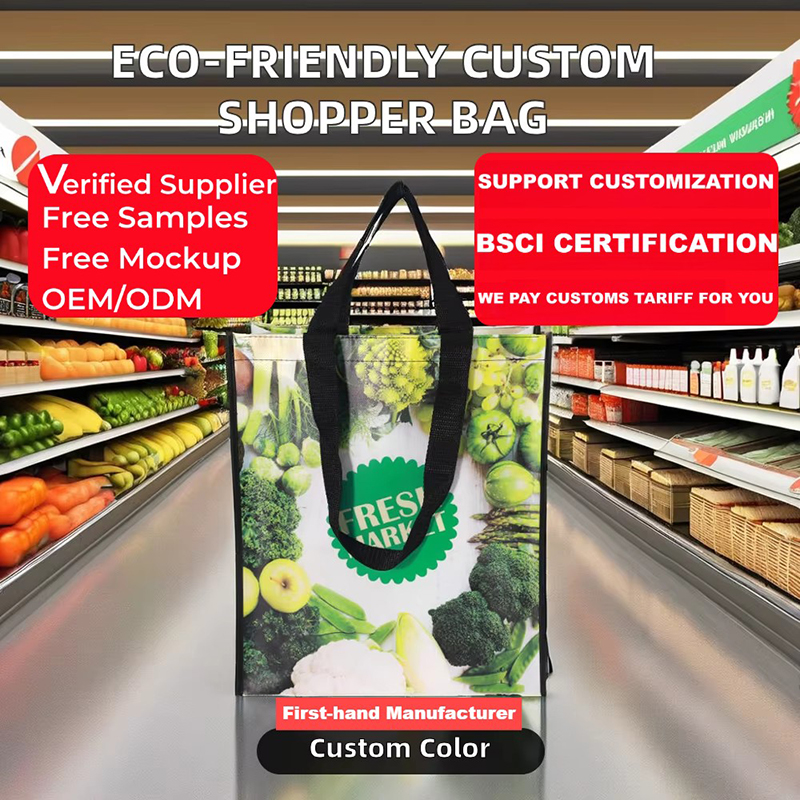




When you manage standardized retail packaging, consistency matters as much as sustainability. You need packaging that performs reliably across stores, regions, and order cycles. RPET eco bags are increasingly adopted because they balance material stability, uniform appearance, and environmental responsibility, making them well suited for structured retail systems and repeat procurement programs.
Standardized retail packaging focuses on uniform size, stable quality, and predictable performance. You rely on packaging that fits shelving systems, checkout workflows, and logistics processes without variation. For many retailers, RPET eco bags meet these requirements by offering controlled material properties and repeatable manufacturing outcomes.
RPET materials are produced through regulated recycling and fiber processing steps that help maintain consistent fabric weight and tensile strength. This stability allows you to reorder the same bag design without worrying about noticeable differences between batches. Consistent RPET fabric supports standardized packaging programs that operate across multiple sales cycles.
Retail packaging must look the same in every store to maintain brand recognition. RPET eco bags provide reliable surface texture and color uniformity when material sourcing and processing are well managed. This makes RPET eco bags suitable for retailers who prioritize visual consistency across locations.
Standardized retail systems often require bags to be reused multiple times by customers. RPET eco bags can be engineered with reinforced seams and handles that support repeated loading and carrying. This structural reliability ensures the bags remain functional within daily retail operations rather than short-term use only.
RPET eco bags are lightweight, flexible, and easy to stack, making them compatible with storage, transport, and in-store handling. Their predictable dimensions allow them to integrate smoothly into existing packaging workflows. Many retailers choose RPET eco bags because they simplify operational planning while supporting sustainability goals.
For retailers with environmental commitments, RPET eco bags align with sustainability targets without requiring major process changes. Using recycled materials allows you to maintain standardized packaging systems while reducing reliance on virgin plastics, helping sustainability initiatives integrate naturally into everyday retail operations.
RPET eco bags suit standardized retail packaging because they combine material consistency, structural reliability, and operational compatibility. When you work with manufacturers such as Emballage Zhongjin, you gain access to RPET eco bags designed to support uniform retail systems while aligning with long-term sustainability objectives.
Why are RPET eco bags suitable for repeat retail orders?
They offer consistent material quality that supports stable reordering without visible variation.
Do RPET eco bags fit existing retail workflows?
Yes, their size stability and lightweight structure integrate easily into standard operations.
Can RPET eco bags handle repeated customer use?
Properly constructed RPET eco bags are designed for multiple reuse cycles.
Are RPET eco bags compatible with branding requirements?
Consistent fabric surfaces support reliable printing and visual uniformity.